
How to Get Court Records
There is more than one way to pull Dallas County court records. Begin with Missouri Case.net. It can surface the case number, the court, the status, and the next docket date. From there, the Dallas County Circuit Clerk handles the rest: a public terminal at the courthouse, file viewing, copies, and certification. Keep one thing straight, though. A Case.net search is public. But a Dallas County docket entry and a document you can download from home are not always the same thing.
Call the Circuit Clerk at (417) 345-2243 before you visit, mail, fax, or email anything about an active case. The county has no copy-request form of its own and no standalone docket portal. The clerk can point you to the right place. That may be a municipal division, probate or juvenile, a court reporter, or the State Archives.
- Use Case.net to identify the Dallas County case number, case style, court, and exact docket entry or document date.
- Decide whether a public online view, courthouse terminal, plain copy, certified copy, transcript, or archive inquiry is needed.
- Call the Dallas County Circuit Clerk for current filing route, public-terminal availability, copy cost, certification procedure, and mailing address.
- Send a narrow written request only after confirming the address and payment instructions.
- Ask for the legal basis in writing if Dallas County access is denied.
Note: A tight request for one named judgment or order usually moves faster than a demand for every page in the case file.
Dallas County Court Records Request Details
Give the clerk enough to find the record, and nothing more. A workable request includes your contact information, the case number or OCN, the case style or party name with an approximate year, the division, the exact item wanted, the entered date or date range, plain versus certified copies, and how you want it delivered. Ask for a cost estimate first. Set a ceiling and say the clerk should stop if fees would pass it.
Leave out the Social Security number, driver-license number, and medical details. They are not needed to locate a Dallas County court record. If the case number is unknown, the court, the filing year, the case type, and the exact document sought will get you further than broad personal facts.
Types of Court Records
A docket is only part of the file. The docket sheet is the chronological index of events, while the case file holds the pleadings, orders, judgments, service records, public exhibits, and other documents behind those entries. What you can actually get depends on the case type, the document status, the public-access rule, and who holds the record.
- Dallas County docket sheets and case headers that identify court activity.
- Public orders, judgments, and dispositions requested by case number and date.
- Civil pleadings, motions, service entries, and enforcement-related records where public.
- Criminal, traffic, and municipal case records subject to their access limits.
- Probate, family, juvenile, or mental-health records with additional confidentiality rules.
- Historic Dallas County dockets, indexes, minutes, and record books held through archive routes.
The Dallas County Circuit Clerk routes state-court records. The county clerk is a separate office. Sharing a county administrative address does not make that office the keeper of a Dallas County court file.
Dallas County Court Records Custodians
Custody is a practical question in Dallas County. The Circuit Clerk routes docket, copy, certification, and municipal-participation questions for the state courts. A court reporter may hold a transcript under a separate process. Older series may sit with the State Archives. Municipal divisions and cities can route ordinance matters their own way, and the county clerk keeps county administrative records rather than every court docket.
The State roster shows the Dallas County mailing address above. A county-association listing gives a different post-office box, so verify the current address before you mail a record request.
What a Court Record Contains
A court record tells a story in layers. The docket lists the events in time order. The document is the actual pleading, order, exhibit, or judgment behind each event. A Dallas County record can show the event itself while limiting access to the document, an attachment, or a protected field. Knowing which layer you need saves time.
| Case header | Dallas County court, case number, filing date, case type, case style, and status. |
|---|---|
| Docket sheet | Chronological event date, code or description, filing source, and linked public document when available. |
| Pleadings and orders | Petitions, complaints, answers, motions, affidavits, and orders subject to access status. |
| Settings and service | Hearing dates, location or division, results, service method, date, and status when displayed. |
| Judgment materials | Judgment, disposition, sentence, costs, satisfaction, vacatur, or enforcement fields where relevant. |
Need proof of a Dallas County outcome? Request the judgment, the order, or a certified disposition. A result-row image or a docket snippet is not the same thing.
Dallas County Court Records and Transcripts
A transcript does not work like a clerk copy. The statewide transcript-payment form shows the process runs through a court reporter, with its own case, hearing, and order details. Ask the Dallas County clerk which reporter handled the proceeding, whether the transcript exists, whether a deposit is required, and whether you need a certified transcript or an audio product.
Dallas County publishes no transcript fee, turnaround time, or audio-retention policy. Do not treat a statewide reimbursement rate as a public-copy quote. The transcript custodian may follow different retrieval and certification steps than the ordinary file.
Certified Copies and Fees
A plain copy is just a reproduction of a public record. A certified copy carries the court's certification for the item you name. Say whether you need a docket, a judgment, an order, or the entire public file. The certification route can differ. Dallas County does not publish current plain-copy, certified-copy, search, postage, or electronic-delivery fees.
| Dallas County item | Published local amount | What to confirm |
|---|---|---|
| Basic Case.net docket search | No charge identified for ordinary public searching. | Use the official portal and verify the chosen court scope. |
| Plain clerk copy | Not located. | Per-page cost, postage, payment method, and whether email delivery is available. |
| Certified clerk copy | Not located. | Which Dallas County custodian certifies the requested judgment, order, or docket. |
| Research or retrieval time | Not located. | Estimate, cost ceiling, and whether payment is required before work begins. |
The state court-cost schedule has context-specific entries, but it is not a Dallas County fee schedule. Get the local quote before paying.
Dallas County Court Records Response Time
RSMo section 610.023 sets the clock for a records answer. The custodian must respond as soon as possible. Three business days is the outer limit, unless a reasonable delay is genuinely necessary. A Dallas County response might confirm that a record exists, ask for more details, flag a cost, or cite a legal restriction. That answer is not a promise, though. Archive retrieval, certification, and sealed-file review can all run past three business days.
If access is denied, get the denial in writing. Ask for the legal basis as well. Keep the request narrow, too. Juvenile, mental-health, sealed, and expunged material cannot be released through an ordinary records request, so do not demand it from the Dallas County court.
Public Access and Sealed Records
Missouri statutes govern access to Dallas County court records. Court operating rules matter too. Case type and any sealing order also play a part. The state's public-record policy leans toward openness. But a Dallas County public docket does not mean every document can be downloaded or copied without review. Court Operating Rule 4 covers public indexes, official records, access equipment, confidential records, sealed records, and expunged access.
Dallas County access limits: RSMo section 610.011 states Missouri’s public-access policy. RSMo section 211.321 generally limits juvenile proceedings and social records. RSMo section 630.140 makes Chapter 632 mental-health court records confidential except through authorized or court-ordered paths.
Ask what access the order or law permits. That is not a puzzle to solve. Do not try to rebuild a restricted Dallas County record from a partial search result or an old historical listing.
Dallas County Court Records Archive Route
Older Dallas County court records can sit beyond the reach of any electronic search. Material from before the computer era may need real archive work. The State Archives inventory lists three relevant series. County Court Docket series C 10316 covers 1875 through 1934. Series C 10317 picks up 1934 through 1950. County Court Record Index series C 11085 spans 1867 through 1949. None of these series is indexed online. A modern Dallas County name search may not reach them at all.
An archive request needs a clear route. The Missouri State Archives judicial resources page and the county-records database help you plan it. Contact the Dallas County archive or clerk. Give the approximate year, court name, case style, record series, and docket number. Say whether you need a scan, microfilm copy, certified copy, or inspection.
Dallas County Court Records Delivery Choices
Electronic delivery can save copying effort in Dallas County. It is not guaranteed. Missouri's electronic-access policy bends to confidentiality limits, technology, and court rules. Ask the Dallas County clerk whether a public copy can go out by email. Ask whether pickup or mail is required instead. Some files may be available only at a courthouse terminal.
The State roster lists a Dallas County clerk fax number and email. Treat both as contacts rather than confirmed request channels. Check the preferred submission method before sending anything with case or contact information in it.
Dallas County Court Records Federal Split
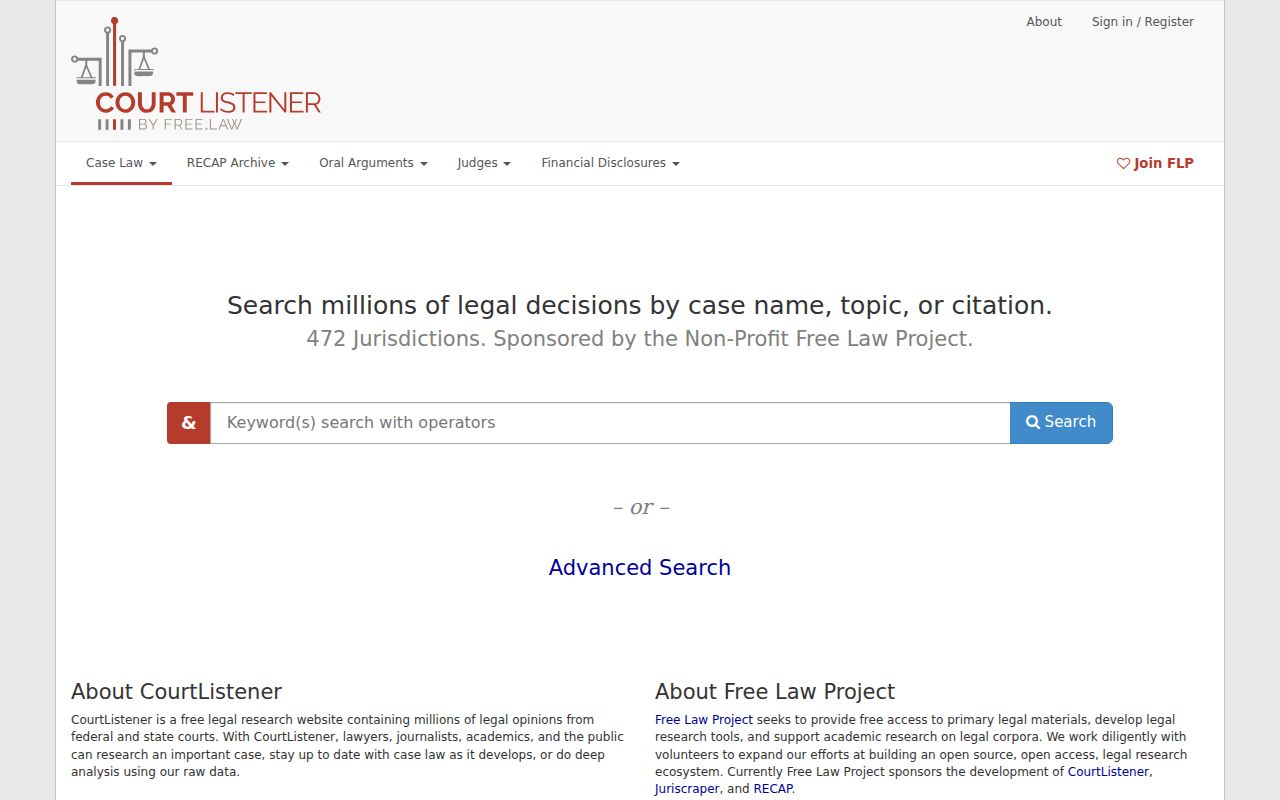
A Dallas County state-court request stops at the state line. Federal civil, criminal, and bankruptcy files live elsewhere. Dallas County sits in the Springfield Southern Division. That division belongs to the U.S. District Court for the Western District of Missouri. Those dockets run on PACER and CM/ECF. Free tools like CourtListener and RECAP gather contributed federal dockets and documents. Coverage is not guaranteed. The official federal docket remains the route for completeness or certification.
The CourtListener and RECAP collection shows how that separate federal layer of court records works.
No federal shortcut replaces the Dallas County Circuit Clerk. For a Missouri state-court docket, copy, or certification, that office is still where a request belongs.
Dallas County Court Records Mail Check
Dallas County official sources disagree about the Circuit Clerk's post-office box. The State roster says PO Box 1910 in Buffalo. The county-association listing says PO Box 373. Do not mail a Dallas County request to either box without current clerk confirmation. Check the counter room before a visit. A phone call to the Dallas County clerk is the safest way to confirm routing.
That address conflict is a routing problem. It is not proof that a record is unavailable. A legal-record request may need a different custodian than an archive inquiry, a transcript request, or a municipal matter. Each has its own channel. Once the clerk confirms the route, state your Dallas County case number, the item, the date, and your certification preference. The response can then address the record you actually want.
Dallas County Court Records Custodian Check
Confirm the custodian before a Dallas County court records request goes out. The Circuit Clerk handles state-court routing. A court reporter may hold a transcript instead. Older material may need the Dallas County archive route. A city matter can take municipal routing, and an administrative record may sit with a different county office entirely. The case number and document type help the clerk point you to the right channel. That quick check saves misdirected mail. It keeps a Dallas County court-record request away from an office that never kept the file.