
How to Search Criminal Dockets
Begin a Dallas County criminal docket search at Missouri Case.net. The portal lets you hunt by name, filing date, case number, scheduled hearings and trials, or judgment index. When a court selector appears, pick Dallas County's 30th Judicial Circuit or whichever participating court fits. Cases fall into several buckets. A circuit felony, an associate felony or misdemeanor, a municipal matter, and a traffic case all look different on the docket.
Have a case number? Use it first. With only a name, match the Dallas County court, party role, filing date, case type, and status before opening anything. An empty result proves little. A misspelled name, the wrong court scope, an archived file, a sealed matter, an expunged record, or a municipal division that sits outside the system can all hide a Dallas County criminal docket that very much exists.
- Open Case.net and choose the Dallas County case-number, name, filing-date, hearings-and-trials, or judgment-index route that fits the information in hand.
- Set the Dallas County or 30th Judicial Circuit scope when the search mode provides a court selector.
- Enter only the needed search fields, then compare the Dallas County case number, filing date, court, status, and case type on the results.
- Open the matching Dallas County case and read its entries in order, including charges, settings, motions, disposition, and judgment or sentence fields.
- Ask the Dallas County Circuit Clerk for a public copy or certified record when the docket points to a document needed for official use.
One caution about Case.net. A Dallas County docket entry is public, but a document you can download from home is a different question, and the two do not always match.
Dallas County Criminal Docket Search Modes
Every Case.net route answers a different question. A name search works when you lack a case number, but it demands careful matching. Filing-date searches narrow the field to a short window. They use a court selector, date control, and case-status choice. Then there is the judgment index, arranged by party, case number, and judgment date. It is an index only, not a full criminal case file or a certified judgment.
The official Track This Case public guide walks through the Dallas County case-number route. It also covers the alert feature. Alerts are a convenience, never official notice of a hearing. Fine Collection Center cases cannot use the tracking tool at all. For a coming Dallas County setting, run the hearings search. Then confirm through the case-specific notice, order, summons, or attorney notice.
Search check: A Dallas County charge or filing identifies an allegation or case event. The disposition and judgment entries supply the court's recorded outcome.
Dallas County Criminal Docket Division Check
Check the header before trusting any Dallas County criminal docket result. The same statewide system holds circuit felonies and associate circuit felony and misdemeanor matters. It also holds municipal cases, traffic matters, conservation matters, and more. Missouri treats Dallas County municipal divisions as divisions of the circuit court. A city-ordinance hit is therefore not a separate court system. Division and category tell you exactly which Dallas County record sits in front of you.
The Missouri court structure overview explains how these divisions fit together. If a result lacks the division you expected, compare its case number, filing date, court, status, and event entries. Do that before assuming it matches your matter. A municipal division missing from the results? The Circuit Clerk can confirm the right routing or case-number format.
What a Criminal Docket Shows
A Dallas County criminal docket opens with a header. It lists case number, court or county, filing date, case type, style, and status. Below that come the parties and attorneys, dated events, and hearing or trial settings. Criminal matters can add fields for the charging instrument, bond or release events where public, plea, motions, disposition, sentence, and financial entries. A field shows up only when the record is public. Your access method must also permit the view.
| Case number | The identifying number for the Dallas County criminal docket. Preserve it exactly rather than inventing a format from a different case. |
|---|---|
| Header and status | Shows the Dallas County court, filing date, case type, style, and a status such as pending or disposed. |
| Charges and filings | May show a Dallas County information, indictment, complaint, motion, order, or linked public document. |
| Settings | Lists Dallas County hearing or trial dates, time, division or location, and any continued, reset, cancelled, or held notation. |
| Disposition and sentence | Records the Dallas County outcome language, judgment, sentence, supervision, costs, or later compliance entry when public. |
Missouri's Court Operating Rule 4 sets out the official record, index, confidential-record, and public-access model that governs Dallas County files across every case type.
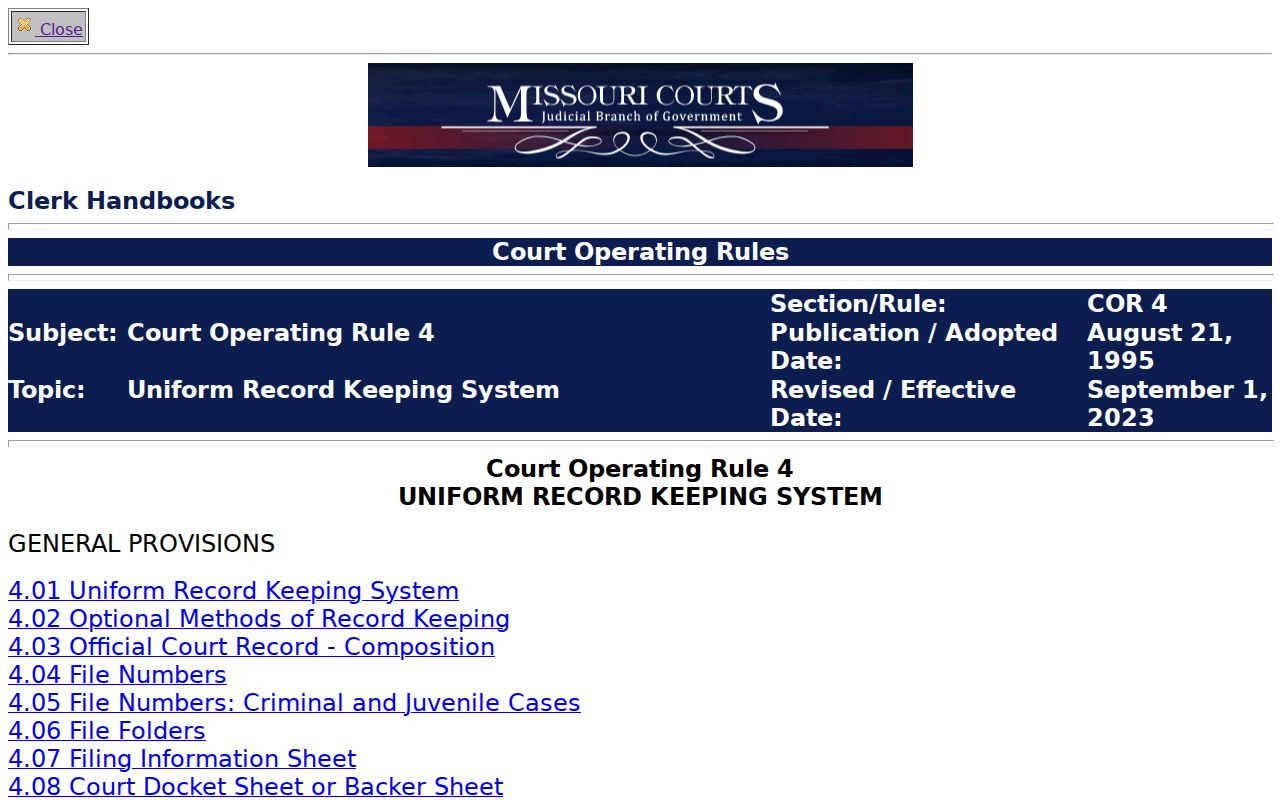
That rule model explains a common puzzle. A Dallas County criminal docket can be visible online while a related document stays locked behind courthouse access or a clerk request.
Dallas County Criminal Docket Status Terms
Think of a Dallas County criminal docket as a timeline. The charging instrument starts the record. An arraignment entry notes an initial appearance and plea. Later work appears as motions, objections, discovery references, and orders. A hearing, trial, plea, or sentencing entry records that the event happened. It does not necessarily record how it ended. Disposition, judgment, sentence, satisfaction, and compliance each do their own job on the page. Treat them as distinct signals rather than synonyms.
- Charge
- An allegation or violation listed in a Dallas County case. It is not a finding of guilt.
- Disposition
- The recorded result of a Dallas County case event or case, which may be a dismissal, acquittal, plea, verdict, diversion result, or other outcome.
- Continuance or reset
- A Dallas County record that a setting changed. It does not itself state the next valid hearing date or decide the case.
- Judgment and sentence
- The Dallas County court's recorded decision and the punishment, supervision, cost, or other terms that follow when applicable.
Read the exact event text before concluding anything. A Dallas County criminal docket stamped "disposed" does not say what happened. The disposition text and later judgment entries hold the real answer.
Stages on a Criminal Docket
A Dallas County criminal docket lines up court events in time order. The first public entry varies. It might be an information, an indictment, a complaint, or a municipal citation. From that point the docket can show a Dallas County arraignment and plea, bond or release activity where public, pretrial motions, hearings, continuances, trial events, a plea, a verdict, and disposition. Later entries may follow. A sentence, supervision-related entry, payment, appeal, certification, or modification can each appear after judgment.
Docket flow: Filing › Arraignment › Pretrial › Plea or Trial › Disposition › Sentencing
Never trust an old continuance entry when a Dallas County setting is still pending. Calendars shift. The practical checks are the Scheduled Hearings & Trials route on Case.net, the Dallas County case header, and any case-specific notice. If a Dallas County notice or order conflicts with a calendar result, the notice or order controls. That document wins.
Dallas County Criminal Docket Archive Path
Dallas County criminal dockets did not all start online. The Dallas County inventory lists County Court Docket series C 10316. It covers 1875 through 1934. Series C 10317 covers 1934 through 1950. Neither is indexed online. A County Court Record Index, series C 11085, runs 1867 through 1949. Those ranges matter. When a careful Case.net search misses an older matter, the archive route becomes the path that counts.
The Missouri State Archives judicial resources and the Dallas County Records database route describe separate historic-record access. Give the Dallas County clerk or archive what you know: case number, style, approximate year, record type, and whether a paper file, microfilm, or archive transfer may exist. Older Dallas County archive material can take longer to pull than a current electronic docket. One caution applies to index work. A Dallas County archive index is a finding aid. It is not proof that a requested criminal document is public or ready for copying.
Dallas County Criminal Docket Filing Snapshot
The official FY2014 Missouri Judicial Supplement reports 2,485 Dallas County criminal filings. That figure sits in the Dallas County row. Treat it as history, not a forecast of the present Dallas County docket or a measure of any single case type. It still teaches a lesson. A Dallas County searcher should read category and division fields instead of assuming every criminal-looking result follows one path.
The supplement's Dallas County row covers circuit and associate criminal activity, plus conservation, watercraft, infraction or traffic, and municipal-ordinance cases. Later statewide annual-report material breaks out no current Dallas County row of its own. So treat the older Dallas County figure as history. It says nothing about today's volume, wait times, or outcome rates in the county.
Which Court Holds Criminal Dockets
Dallas County belongs to Missouri's 30th Judicial Circuit, alongside Hickory, Polk, and Webster counties. The Dallas County Circuit Court is the trial-court starting point. It houses circuit civil and criminal divisions, associate circuit divisions, and statutory divisions. Municipal divisions sit inside the circuit court rather than forming a separate state-court level. That structure explains a common Case.net snag. A Dallas County ordinance case and a circuit criminal case may need different category or participating-court choices.
Dallas County circuit-court appeals route to the Missouri Court of Appeals, Southern District. A Dallas County state search will not locate federal prosecutions or federal bankruptcy matters. Dallas County falls in the Springfield Southern Division of the Western District of Missouri, which uses PACER and CM/ECF rather than Case.net.
Dallas County Criminal Docket Outcome Check
Read a Dallas County criminal docket without turning a filing into a judgment about a person. A charge is only an allegation. A filed case is not a conviction. A calendar row is not a hearing notice. Even a judgment-index entry stays an index, not a complete certified decision. Before relying on any result, match the case number, court, party role, filing date, and event language.
When you need a recorded disposition, ask for the specific public judgment, sentencing order, disposition, or charging document by name and date. The Dallas County Circuit Clerk can explain the public-copy route, courthouse terminal availability, and any restriction on a particular document. The clerk's official roster contact is listed by the Missouri Secretary of State.
Dallas County Criminal Docket Copy Requests
Once a Dallas County criminal docket points to a public item you need, request that item by name. Do not ask for the whole case file. Give the Circuit Clerk the case number and document title. Include the entry or filing date. Say whether you want a plain or certified copy, and ask how to get it. The office can explain whether a public document is available at a courthouse file viewer, at the counter, or by written request. Confirm the correct mailing address first.
Call (417) 345-2243 before mailing or sending anything. The State roster lists the clerk's email and fax as contact routes. Neither is guaranteed to accept every copy request. Confirm current fees, delivery options, payment instructions, and the proper mailing address first, since an association listing and the State roster use different post-office boxes. Keep the request narrow. That way you avoid asking for records that may be juvenile, sealed, expunged, or otherwise restricted.
Public Access and Sealed Criminal Dockets
Several things control what you can see in a Dallas County criminal docket. Court Operating Rule 4 is the main one. It covers public indexes, access equipment, and how confidential, sealed, and expunged records are handled. Beyond the rule, statutes, case type, and any sealing order can each narrow access. Here is a common surprise: a public docket entry confirms that an event took place. Yet the pleading, exhibit, or order behind it may still be off limits for remote download. The Dallas County clerk can point you to the lawful way to request such a document. What the clerk cannot do is route around a restriction.
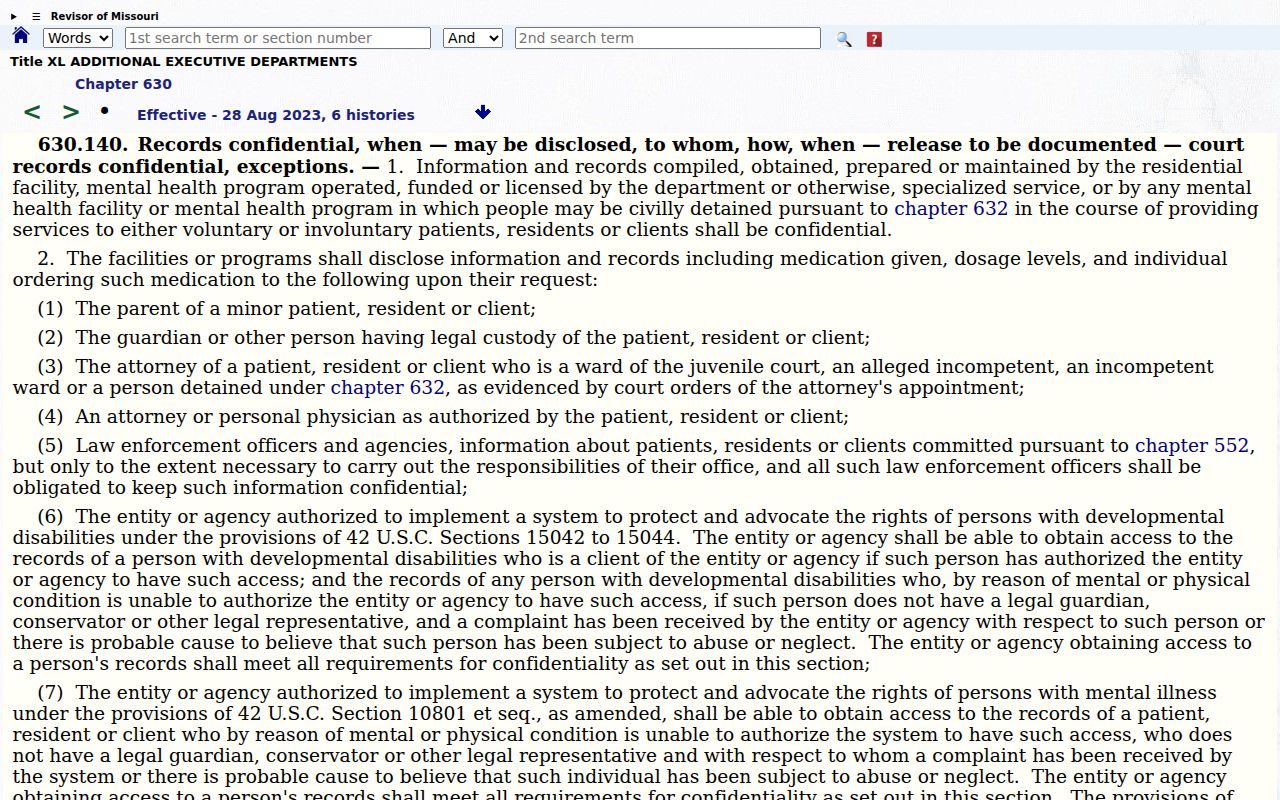
Access limits: RSMo §211.321 generally limits juvenile proceedings and social records. RSMo §630.140 makes Chapter 632 mental-health court records confidential except through authorized or court-ordered paths. Sealed and expunged records require the access allowed by law or order.
Dallas County Criminal Docket Access Limits
Adult access in Dallas County does not mean every criminal record works the same way. Juvenile dockets are the clearest example. Their proceedings carry a confidentiality rule with narrow statutory exceptions. A missing juvenile result is not a sign your case lookup failed. Mental-health court files under Chapter 632 are confidential too. They open only for an authorized person or by court order for good cause. The official juvenile-access statute sets the limit that governs Dallas County juvenile materials.
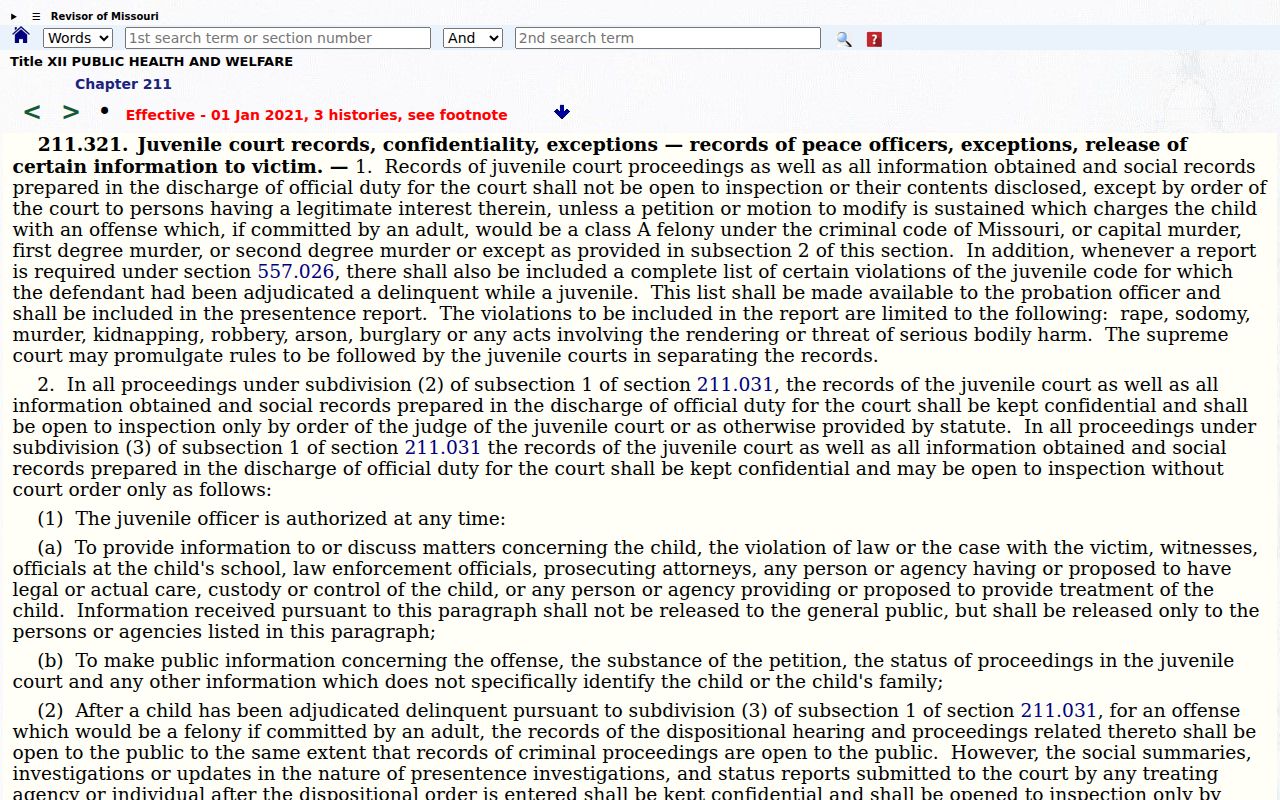
That barrier keeps juvenile Dallas County criminal docket handling apart from an ordinary adult case lookup. The official mental-health confidentiality statute spells out which Chapter 632 court records are protected.
When access is uncertain, ask the Dallas County Circuit Clerk for the permitted procedure rather than trying to rebuild a sealed, expunged, juvenile, or mental-health record on your own.