
How to Search the Urbana Court Docket
Missouri Case.net is the official starting point for any Urbana court docket search. The public tools cover searches by litigant name, filing date, case number or OCN. They also cover hearings, trials, and a judgment index. Use the Urbana citation or case number first when you have one. Working from a name alone? Tighten the filing-date range as much as you can. Then read the court, county, case type, status, and event rows before deciding a result truly belongs to Urbana.
- Open Case.net and choose the Urbana search mode that matches the information in hand. A citation or case number is more precise than a broad name search.
- Select a municipal or circuit-court scope appropriate to Dallas County and the 30th Judicial Circuit when that choice is displayed.
- Confirm the Urbana result header. Check the court, filing date, case category, case number, and status before reading the docket line by line.
- Review the Urbana entries for the violation description, hearing event, date, disposition, and any public compliance or payment notation.
- If the Urbana search returns no match, call the Dallas Circuit Clerk at (417) 345-2243 for the current division, format, and custodian.
A blank Urbana result proves nothing. The miss may come from a search set too wide, a spelling error, or an older paper record. It could also be a restricted matter. It could also be a city division needing confirmation. It could be a citation format the clerk must decode. Never type a Social Security number or other private identifier into a public search for Urbana court records.
Urbana Court Portal Gaps
Urbana is the second incorporated Dallas County city listed in the 2020 Census place table, with a population of 387. That figure identifies the city and nothing more. It is not a court directory. It cannot prove any particular municipal-court setup for Urbana. The city posts no official court page, public docket portal, judge list, direct court telephone number, citation-payment page, or daily calendar, which points to a narrower search path rather than a claim that no municipal division exists. The official Census incorporated-place table is the official record behind this Urbana court docket image.
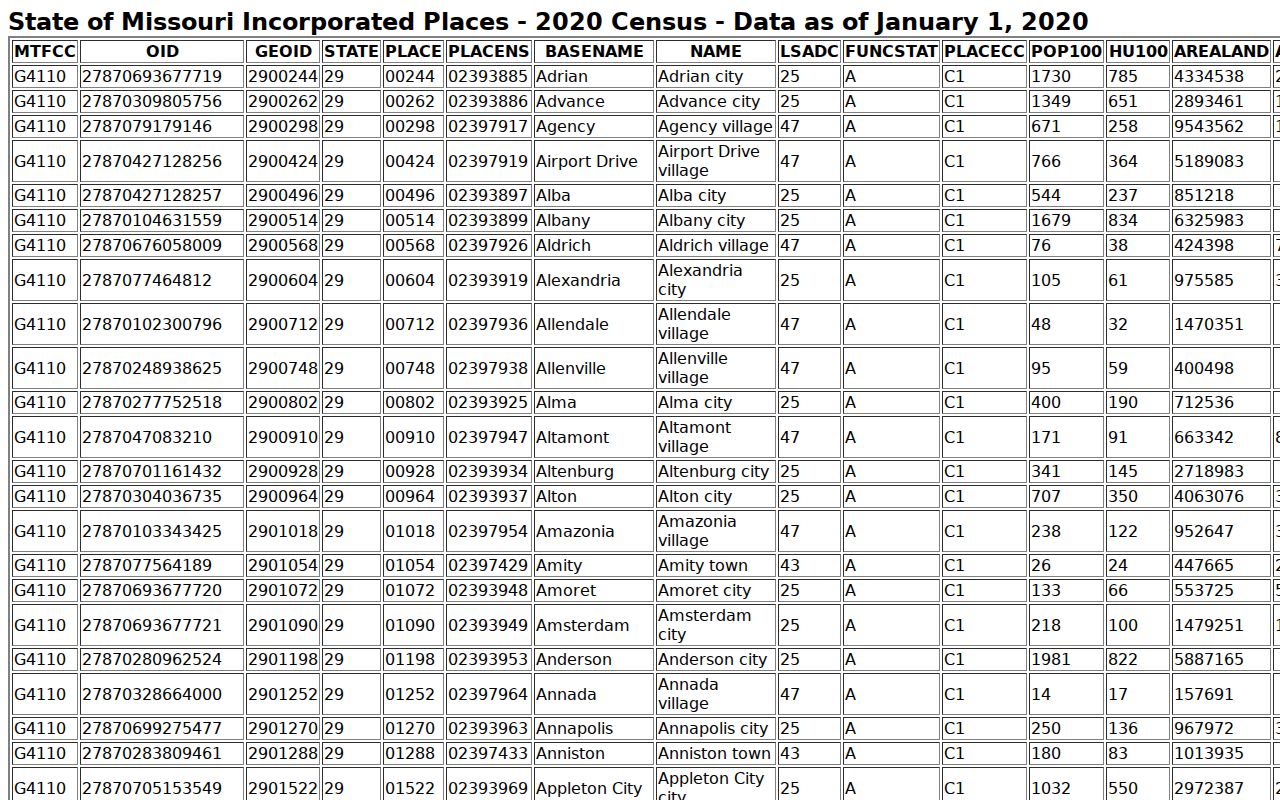
The census table backs Urbana's city status and the two-city scope of this county site. Court participation, a current payment route, and a live hearing schedule still require confirmation. That confirmation comes from the Dallas Circuit Clerk. So the practical Urbana sequence is Case.net first, then the clerk if the online result is thin or missing. The habit prevents confusion. It keeps an unverified directory listing, a map entry, or a population table from posing as an official Urbana court contact.
The Urbana Municipal Court
Missouri treats municipal divisions as divisions of the circuit court that handle city-ordinance matters. RSMo §479.020 spells out that relationship. It does not name Urbana's current judge, clerk, or courtroom. It offers no Urbana calendar. The rule still matters for a court docket search. A city matter can tie into the wider circuit-court system even without a dedicated court website. An Urbana ordinance or traffic matter is not solved by a city label alone. Read the case category, violation description, and court on the Urbana docket. A circuit-level filing, a county traffic case, and a city-ordinance matter can each demand different follow-up. That holds even for events in or near Urbana. The Dallas Circuit Clerk is the routing point. That office confirms Urbana participation, case-number format, public-terminal access, copy procedure, and the current municipal contact. The county clerk is a separate office. It should not receive a court-record request just because it handles county administration.
Urbana Citation Fields to Keep
Before searching an Urbana citation, write down key details. The non-sensitive specifics help the clerk or Case.net tell one record from another. The official municipal-clerk material lays out a general filing model rather than Urbana-specific practice. Keep the citation or case number, court, category, and violation description. Also keep the event date, hearing entry, and disposition. Add any payment or compliance notation. That trail makes an Urbana court docket search easy to verify. It does so without republishing anyone's private identifiers.
| Urbana detail | Why it helps |
|---|---|
| Citation or case number | Provides the strongest Urbana search key and lets the clerk check the correct format. |
| Court and category | Separates a municipal-traffic or ordinance result from another Dallas County filing. |
| Hearing event and date | Helps identify the setting that must be confirmed with the court. |
| Disposition or compliance entry | Shows a recorded event, not a substitute for a certified Urbana judgment. |
Skip the driver's license number, date of birth, address, and financial account details when taking notes on an Urbana case. The question that matters is whether the record can be located and verified. A public search should never be turned into a profile of a person.
Urbana Court Dates and Settings
Check any Urbana hearing date against the case-specific notice, summons, order, or attorney notice. Case.net Scheduled Hearings and Trials serves as a statewide starting point. It works when the relevant court participates. Pick the Dallas or 30th Circuit scope. Set the date window, and verify the case number and event. The court posts no official Urbana daily docket calendar, remote-observation page, or standing hearing schedule. So never guess a recurring Urbana docket day.
| Date | The Urbana setting date displayed in the case or hearing search, subject to later changes. |
|---|---|
| Time | The listed event or docket-call time, not an assumed arrival time. |
| Courtroom | The location or division only when the notice, Case.net, or clerk confirms it. |
| Judge | The judicial officer field if displayed; no official current Urbana judge listing was located. |
| Setting Type | The event label, such as hearing, ordinance matter, traffic event, trial, review, or another listed proceeding. |
A calendar row can list a scheduled event without showing the controlling notice or the eventual outcome. A continuance, reset, cancellation, or new order can shift a future setting. When the online result and the notice disagree, recheck the Urbana case header and call the clerk before appearing.
Urbana Municipal Event Codes
Statewide municipal-clerk guidance offers a starting point for reading an Urbana docket. No two court screens label events the same way. In that model, O5 covers municipal traffic and O6 covers municipal other. SCTR tags a routine traffic hearing. SCHR marks an ordinance-violation hearing instead. Treat these as general clues about a court record, not an official Urbana event-code key. Never read one code as a promise about how a case turned out. Also watch for other codes the municipal clerk guidance describes.
- Case category
- The court's classification of the Urbana filing, useful for separating traffic, ordinance, and other matters.
- Setting
- A scheduled Urbana court event. It may be a hearing, trial, review, or other proceeding rather than the final result.
- Disposition
- The recorded case outcome or action. Read the exact Urbana event because a disposition is not always the same thing as a conviction.
- Continuance
- A postponement. A continued Urbana setting must be checked again for the next future date.
When a code on the Urbana docket makes no sense, copy the exact label and ask the clerk. Clarity beats guessing. Reading too much into an abbreviation can turn a routine hearing entry into the wrong conclusion about a case.
Urbana Traffic Tickets
Start an Urbana traffic ticket search with the citation or case number. Do not rely on a name alone. The docket entry should show the court. It should also list the violation description, its category, any hearing, and the disposition. Careful here. A result tied to Dallas County does not by itself prove the case is an Urbana ordinance matter. And a docket event may show a filing or hearing happened. That still says nothing about the final outcome.
The city publishes no official Urbana payment page, fine schedule, or deferred-disposition program. Case.net links out to statewide payment resources. Treat none of them as available for your case until the court or clerk confirms the eligibility, amount, due date, and method. Want to contest the charge? Call the court promptly rather than treating any payment link as legal advice.
For the wider county picture on citations, court dates, and the difference between a court record and a Department of Revenue driver record, see Dallas County traffic court records. The Urbana docket is still where you verify the court case itself.
When Urbana Citations Do Not Search
When an Urbana citation search comes back empty, check the digits and the court scope. Do not assume the case vanished. Case.net's own materials note that a uniform citation can serve as a case number. If yours runs longer than nine digits, the guidance points to the clerk or court-system support. Do not guess a trim or edit. A narrow filing-date search with the party name may help. Even then, the county, court, and category must all match. Only then can you call it an Urbana case.
The next call is the Dallas Circuit Clerk at (417) 345-2243. Ask which Urbana division or case-number format is current. Ask whether that division participates in Case.net. Also ask where a public terminal sits and which office holds the record. Ask separately about payment, copies, and hearing instructions. Do not swap in an unverified directory number for that confirmation path.
Keep the question narrow. Give the Urbana citation or case number, the event date, and the document or setting needed. That helps the clerk identify the right custodian without inviting disclosure of private case details.
Where Urbana Cases End Up
An Urbana city matter and a Dallas County circuit filing are different things. They do not share one docket path. A city-ordinance case may start inside the municipal-division framework. Anything beyond that level, including many civil, felony, misdemeanor, family, probate, and statutory-division cases, goes to the Dallas County Circuit Court within Missouri's 30th Judicial Circuit. Look at the case category and court on the Urbana result. That tells you which door to try first.
Docket flow: Urbana Municipal Court › Dallas County Circuit Court › Missouri Court of Appeals, Southern District
The appellate court is a separate record path, opened only after an appeal, not the automatic next stop for every Urbana case. For county-level court structure and access channels, use the Dallas County court docket and match the case to its court before trusting a search result.
Urbana Records Beyond Case.net
An older Urbana matter may predate online case search entirely. It could sit in paper, on microfilm, or in an archive series nobody has digitized. The Dallas County inventory lists County Court Docket series C 10316 covering 1875 through 1934. Series C 10317 covers 1934 through 1950. Both are unindexed online. The County Court Record Index series C 11085 spans index entries from 1867 through 1949. None of that proves a specific Urbana case lives in a given series. It does show why an empty modern docket search is not a complete historical answer.
Search the Missouri State Archives county-records database by county, office type, record type, keyword, city, and year. It is not a party-name index for everything. For an Urbana historical request, bring the approximate year. Add the court name if known. Bring the case or docket number and the record type you want. Say whether you need inspection, a scan, microfilm, or a copy.
Call the Dallas Circuit Clerk first. Ask whether the Urbana record is local or paper-only. Ask too whether it sits under a different historical number or has already gone to archives. One focused question beats overstating what Case.net or an archive index can supply.
Public Access to Urbana Court Records
Missouri public-access principles, court rules, statutes, and case-specific limits all govern Urbana court records. A public Urbana docket can list the case number, court, events, settings, and disposition. The document itself may stay off remote view. Juvenile, mental-health, sealed, expunged, and protected personal-information records carry their own restrictions. Access is one thing. Publishing a private address, birth date, license number, financial data, medical detail, or protected identity from a court record is quite another.
Shape any Urbana request around the city or court, the case or citation number, the document and date, the copy type, your contact details, and how you want delivery. Confirm the custodian before sending it. The clerk can also answer a viewing question. Ask whether an online document still requires a trip to the courthouse even when its docket entry is public.
Key Rules:
Missouri Sunshine Law, RSMo §610.011 states Missouri's policy favoring public access to public records, subject to applicable limits.
RSMo §610.023 sets a custodian response framework, generally as soon as possible and no later than the end of the third business day unless delay is reasonable.
Court Operating Rule 4 addresses court record systems, public access equipment, indexes, confidential material, and sealed records.
Urbana Copy Fees and Confirmation
Urbana posts no official copy-request form. Nor does it publish plain-copy or certified-copy fees, and no payment portal is listed. So call the Dallas Circuit Clerk before you mail any money or a written request. Ask whether the Urbana record sits with a municipal division or with the circuit clerk. Ask as well whether the item you want is public. Then confirm what plain or certified copy you can get. Confirm the current fee too, and how the office takes payment. One more thing: ask whether you need to include postage, or whether the clerk will send an invoice instead.
The municipal fine-limit statute, RSMo §479.353 is the source shown on this Urbana court record page. The page displays the statute itself.
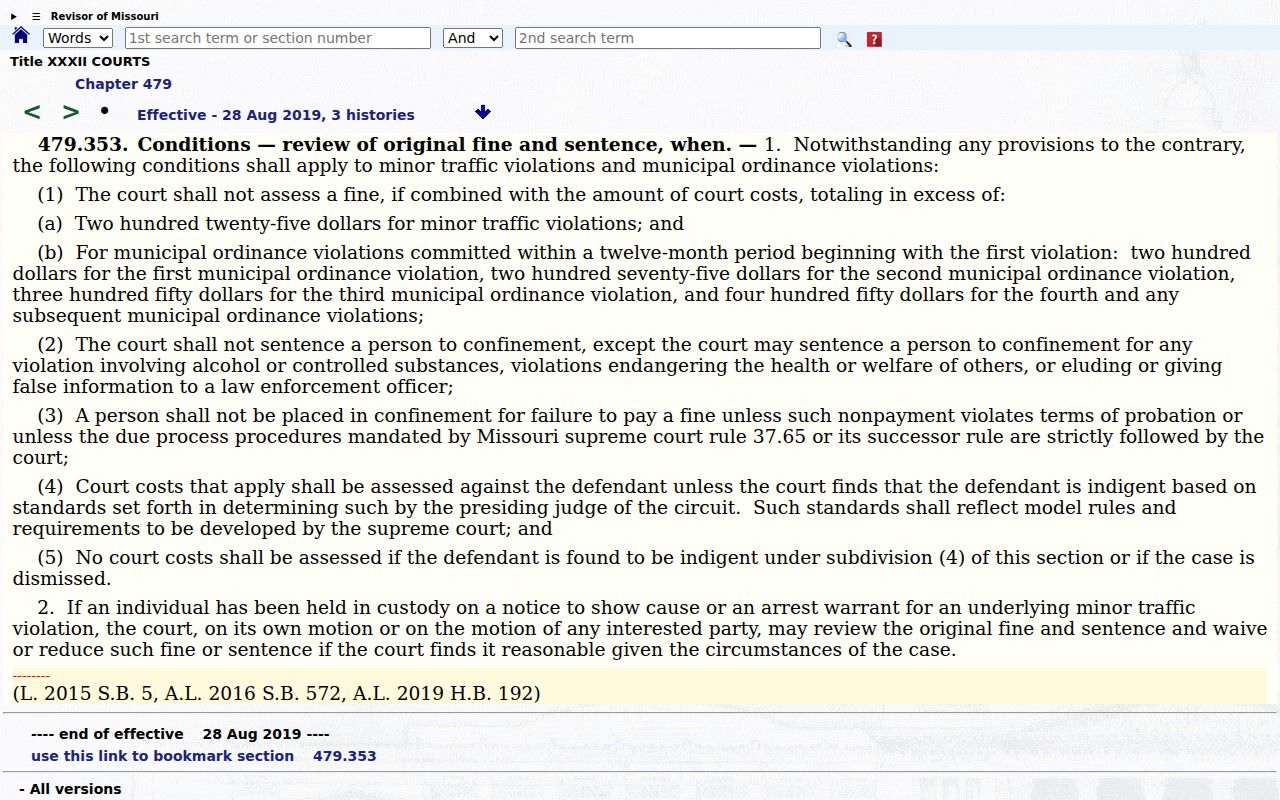
That statute fixes ceilings for municipal traffic and ordinance fines. It does not tell you what an Urbana citation costs. Treat it as a limit, not a fine schedule or a fee quote, and not as proof that your ticket can be paid without showing up. For the exact amount, ask the court or clerk. The case-specific number and the payment route come from them alone.
Note: A narrow Urbana copy request should name the document and its date, then ask the office holding the record to confirm the current fee before any payment goes out.